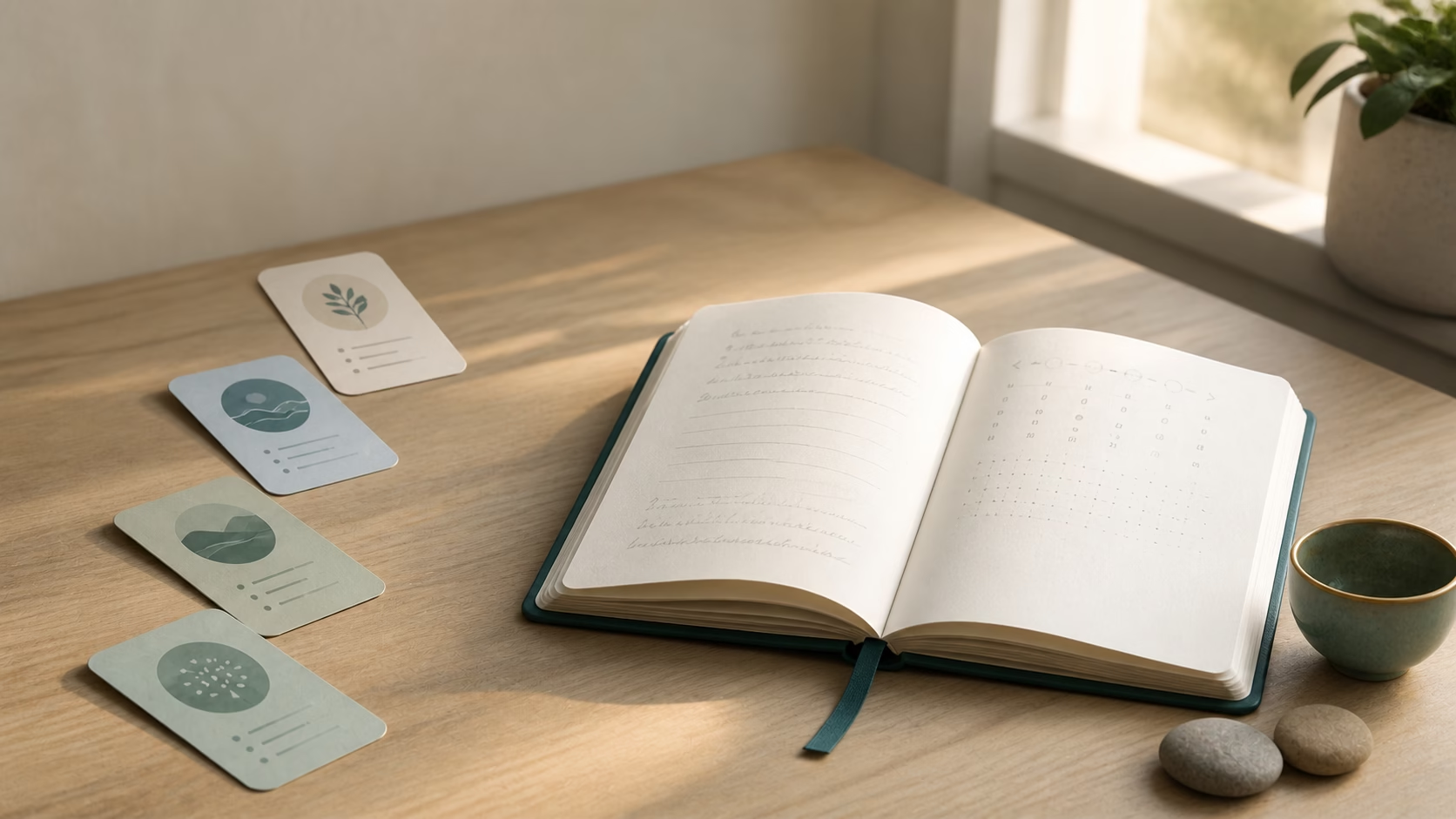
Journalling is often recommended as a way to reflect, manage anxiety, organise thoughts, recognise progress and make better decisions. Yet the advice to “start journalling” can create a problem of its own.
Where do you begin? What should you write about? How much time should it take? And what happens when the journal you have chosen does not quite fit the way you think or the situation you are facing?
A blank page can represent freedom, but it can also feel like another demand.
That tension was the starting point for my Journal Generator.
One journal does not suit everyone
People journal for different reasons.
Someone looking for employment may want to record applications, prepare for interviews and recognise evidence of progress. Someone managing ADHD may benefit from noticing the conditions that help them begin, sustain attention or experience flow. A person dealing with anxiety may need a calmer way to distinguish what is within their control from what is not.
Others may want to explore their preferred future, acknowledge accomplishments, practise gratitude or simply create a few minutes of useful reflection each day.
These needs overlap, but they are not identical. A fixed journal designed around one person’s priorities can easily become irrelevant—or another unfinished item accompanied by a sense of failure.
I wanted to create something more flexible: a tool that lets each person decide what would be useful to them.
Guided, but not prescriptive
The Journal Generator allows you to choose from several approaches, including:
Solution Focused reflection
Employment search
ADHD and flow
Wellbeing and anxiety
A custom or mixed approach
You can combine these with optional areas such as mood and energy, sleep, priorities, gratitude, accomplishments, distractions, routines and job applications.
You also choose the date range, daily check-in length and whether to include weekly reflections or deeper journalling pages.
The result is a personalised PDF journal rather than a generic collection of prompts.
The questions provide enough structure to make starting easier, while leaving the answers—and their meaning—with the person using the journal. It is guidance without instruction and structure without judgement.
Why the Solution Focused influence matters
My own work is strongly influenced by Brief Solution Focused practice. That means paying attention to people’s hopes, strengths, resources, exceptions and signs of progress.
Traditional reflection can sometimes become an extended examination of what went wrong. Understanding difficulties can be useful, but repeatedly analysing a problem does not automatically show us how to move forward.
Solution Focused questions create a different kind of conversation:
What are your best hopes?
What would tell you things were moving in the right direction?
What is already working, even a little?
What have you noticed yourself doing well?
What small next step would be worthwhile?
These are not instructions to “think positively” or ignore genuine difficulties. They are invitations to notice possibilities, capability and movement alongside the problem.
A journal built around those questions can become a record of developing knowledge: what helps, what matters, what has changed and what the person wants to continue.
Designed for concise daily use
A journal only becomes useful if it is usable.
I did not want to create something that required a substantial writing commitment every day. Some days offer time and energy for deeper reflection; other days permit only a two-minute check-in.
The generator therefore offers different levels of intensity. A person can create a concise daily journal, a more detailed reflective journal or something in between.
The intention is not to reward the greatest quantity of writing. A short observation can be valuable. One noticed success, one helpful condition or one meaningful next step may be enough.
Consistency should not require perfection.
The calendar is part of the journal
Digital journals can become cumbersome when navigating hundreds of pages. For that reason, the calendar is not merely decorative—it is the journal’s navigation system.
Dates on the monthly calendar link directly to the corresponding daily pages. Journal pages include links back to the calendar, while optional weekly and deeper reflection pages are connected to the relevant dates.
This makes the finished PDF practical on an iPad, BOOX device, computer or other PDF-compatible device. A printable A4 option is also available for people who prefer paper.
The technology should make reflection easier, not become another obstacle.
Privacy by design
The web-based Journal Generator creates the PDF inside your browser.
Your selections do not need to be submitted to me, stored in an account or added to a database. The finished journal downloads directly to your device.
This was an important design decision. Journalling can involve personal, emotional or sensitive material. A tool intended to support reflection should collect as little information as possible.
The generator creates the journal structure; what you subsequently write remains yours.
Why I am sharing it
I initially began exploring the idea because I wanted a practical way to create different journals without rebuilding each one from the beginning.
As the project developed, it became clear that its usefulness could extend much further.
Someone preparing for a career change may need one kind of journal today and a different one several months from now. A person discovering how their attention works may want to combine ADHD and flow prompts with accomplishments and wellbeing. A coach may want to recommend a gentle reflection structure without prescribing how a client should think or what they should disclose.
Sharing the generator allows people to create something suited to their present circumstances rather than adapting themselves to a fixed product.
I am also sharing it because useful tools do not always need to be complicated, intrusive or hidden behind another account. Sometimes the most helpful technology simply gives someone a clear place to begin.
A tool, not a treatment
The Journal Generator is intended as a reflective and organisational tool. It is not a diagnostic instrument, a substitute for professional mental-health support or a promise that journalling will resolve every difficulty.
Some people find journalling helpful; others do not. Some questions may feel useful at one time and irrelevant at another. You are always free to skip a prompt, change your selections, shorten the date range or stop using the journal.
The tool should serve the person—not the other way around.
Create the journal you need now
You do not need to know exactly what kind of journal you want before beginning.
Choose the areas that seem most relevant, select a manageable daily length and create a journal for the next week, month or season. Notice what helps. Adjust it the next time.
The aim is not to produce a perfect record of every day. It is to create a small, accessible space for noticing what matters, recognising what works and identifying what might be worth doing next.
That is why I created the Journal Generator—and why I am making it available to others.